
To utilise the audience data in a way that’s meaningful to your operations, you need proper CRM. Here's how venues are using it well.
Segment your audience before you hit send
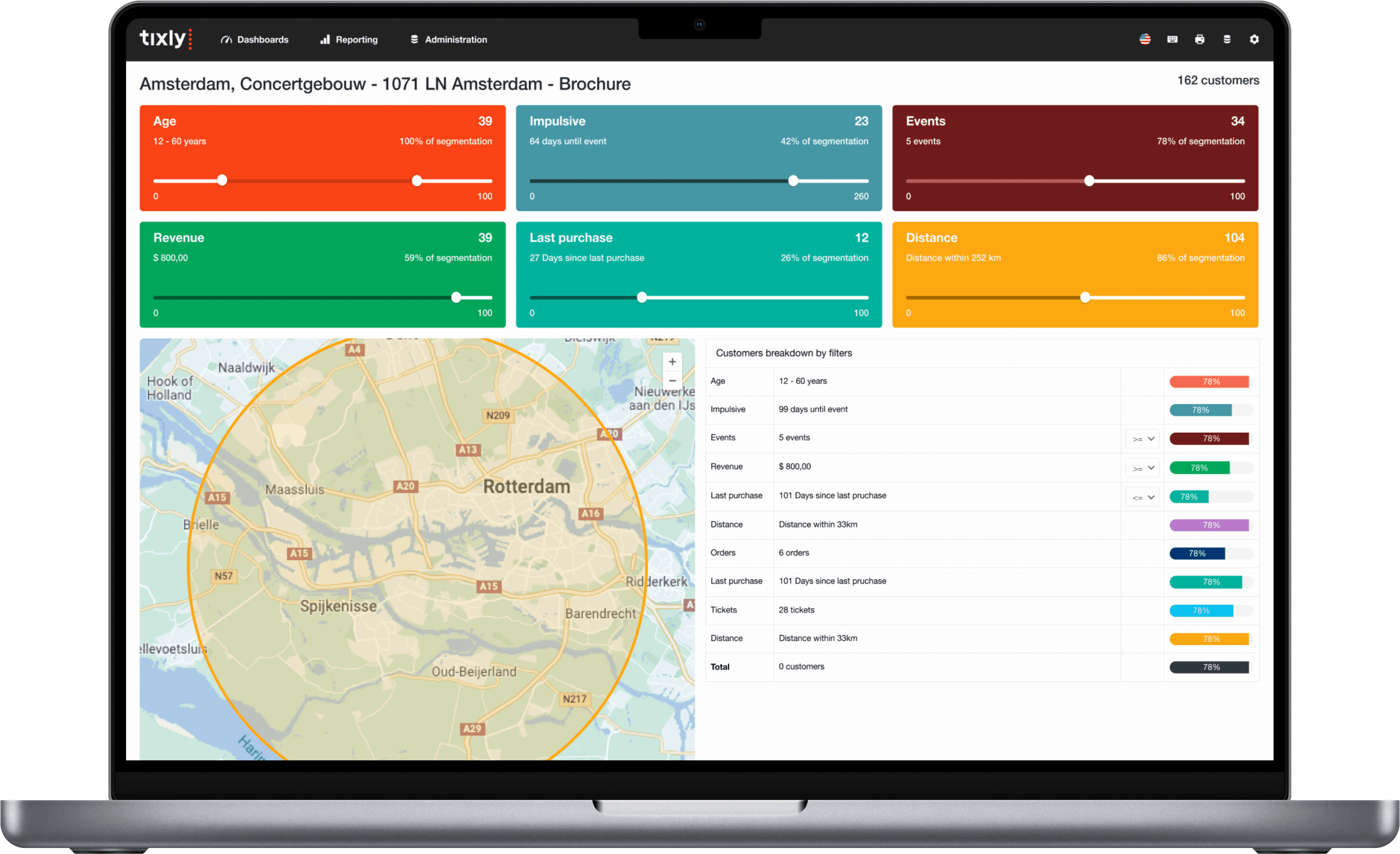
Sending the same message to your entire database is the fastest way to train people to ignore you. A well-configured CRM lets you split your audience into meaningful groups - first-time visitors, lapsed subscribers, loyal multi-show attenders, members who haven't renewed - and speak to each one differently.
This doesn't have to be complicated. A simple segment based on purchase history can already make a significant difference. Someone who has attended three or more productions this season needs a different message to someone who bought a ticket eight months ago and hasn't been back. Treating them the same is a missed opportunity in both directions.
Venues that get the most out of segmentation tend to start small: two or three clearly defined groups, tailored messages, and a clear goal for each. From there, the logic becomes easier to build on.
Use personalisation where it actually counts
Personalisation doesn't mean inserting someone's first name into an email subject line. It means using what you know about them to make the communication more relevant.
Musikhuset Aarhus used Tixly's personal welcome SMS feature to reach customers before and after events with messages tailored to what they'd booked. The results were significant - an 89% open rate and a 12% improvement in daily workflows. Those numbers reflect what happens when a message arrives in the right channel, at the right moment, with the right context.
For most venues, the highest-value moments to personalise are the post-purchase confirmation, the pre-event reminder, and the follow-up after a first visit. These are the touchpoints where your audience is most engaged, and where a relevant, well-timed message does the most work.
Automate the workflows your team repeats every week
Box office and marketing teams in arts venues are rarely overstaffed. Automation isn't about removing the human element from audience relationships - it's about freeing your team to focus on the work that actually requires human judgement.
The most useful automations for performing arts venues tend to be renewal reminders sent at the right point in the subscription cycle, re-engagement sequences for customers who haven't visited in a defined period, and follow-up messages after a first-time visit. None of these require significant technical setup if your CRM is connected to your ticketing data - and all of them would otherwise eat into time your team doesn't have.
This is where the right integrations make a real difference. Tixly's partnership with MarketHype, for example, connects your ticketing data directly to a marketing automation platform built specifically for cultural venues. Segmentation, automated campaigns, and cross-channel messaging all pull from live ticketing data - so your team isn't manually exporting lists or second-guessing whether the information is current.
Make sure your tools are actually talking to each other
The most common reason CRM efforts stall isn't a lack of data or ambition - it's disconnected systems. If your ticketing platform, your marketing tools, and your website are all operating independently, you'll always be working from a partial picture.
For venues that want tighter control over how their content and ticketing experience connect, tools like CultureSuite extend what's possible directly within the Tixly ecosystem. Having your event content, ticketing flow, and customer data aligned in one coherent setup reduces the manual handoffs that slow teams down and introduce errors.
The broader point is that your CRM strategy is only as strong as the integrations supporting it. A ticketing system with an open architecture - one that connects cleanly to purpose-built tools for marketing, content, and analytics - gives you far more to work with than a closed system that requires workarounds at every step.
Track what's working and adjust
A CRM is only as useful as the decisions it informs. That means building in a habit of reviewing what your campaigns and automations are actually producing - not just open rates, but downstream behaviour. Are the people who receive your re-engagement email coming back? Are first-time visitors who get a follow-up message more likely to book again?
These aren't difficult questions to answer if your data is connected, but they're often skipped in favour of the next campaign. Venues that close this loop consistently tend to find that a smaller, well-maintained database outperforms a large one that's been neglected.