

Generic event ticketing platforms weren't designed for these types of requirements. So when you're evaluating your options, the question isn't just "does it sell tickets?" - it's whether the system was built with your specific operational reality in mind.
Here are the five features that make a genuine difference.
Mobile ticketing and digital wallet support
Audiences increasingly expect to buy a ticket on their phone and walk straight in. That means your ticketing system needs to support mobile ticket delivery and integration with digital wallets like Apple Wallet and Google Wallet - and it needs to do so reliably, without friction at the door.
The picture varies across regions and audience demographics. In some markets, mobile adoption in the arts is still growing. In others, it's already the norm. Either way, the direction of travel is clear, and venues that haven't prepared for it are creating unnecessary barriers between their audience and the door.
Beyond convenience, mobile ticketing reduces the cost of printing and posting physical tickets, speeds up entry, and gives you better data on how tickets are being used.
Subscription and membership management
Subscriptions and memberships are the backbone of audience loyalty in the performing arts. A good ticketing system should make it easy to create flexible packages, manage renewals, and give customers control over their own preferences - whether that's choosing their seats, swapping a performance, or upgrading their package.
From the venue's perspective, subscriptions also provide more predictable revenue ahead of the season. You know earlier what demand looks like, which helps with planning, staffing, and programming decisions.
This is one area where generic platforms consistently fall short. Managing a multi-show subscription series with seat selection, renewal windows, and customer self-service requires functionality that was built for it, not retrofitted. If renewals are a painful process every year, the system isn't doing its job.
Audience data and reporting
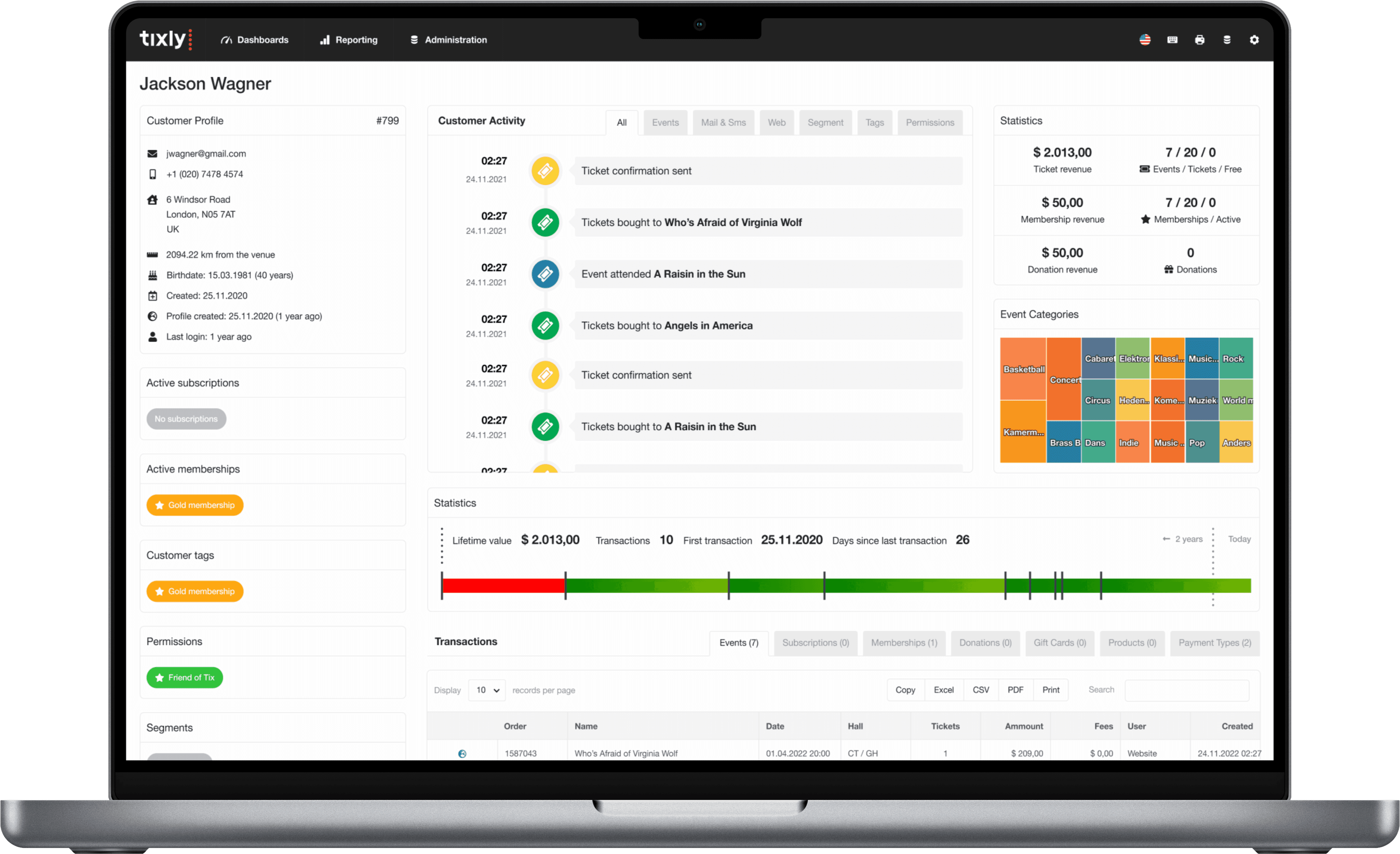
You can't make good decisions about programming, pricing, or marketing without reliable data. Your ticketing system should give you clear visibility into who your audience is, how they buy, which events they attend, and how their behaviour changes over time.
This goes beyond basic sales reports. Useful reporting lets you segment your audience, identify your most loyal customers, track trends across seasons, and spot where you're losing people in the buying journey. It should also be straightforward enough for non-technical staff to use without exporting everything into a spreadsheet first.
One thing worth asking any provider: who owns your data? With some platforms, your audience data sits in their ecosystem, not yours. For performing arts venues that have built their audiences over decades, that's not a small consideration.
CRM and audience engagement tools
A ticketing system with built-in CRM lets you build a complete picture of each customer - their purchase history, membership status, communication preferences, and more. That's what makes genuinely personalised marketing possible.
Venues that use audience segmentation well send fewer communications but get better results. Instead of a blanket announcement to your entire database, you can target first-time visitors with a welcome offer, lapsed subscribers with a return incentive, or your most loyal customers with early access to new productions.
Integration with your existing email and SMS tools matters here too. Your ticketing system should share data cleanly with the tools your marketing team already uses - not force you to choose between them or maintain duplicate records across platforms.
Integration and open architecture
The fifth feature most venues underestimate is how well their ticketing system connects with everything else: your website, your marketing platform, your finance tools, your access control hardware.
A closed system creates bottlenecks. Every time data has to be manually exported, reformatted, and imported somewhere else, that's time your team is spending on admin rather than on your audience. An open API means your ticketing platform can talk directly to the tools you already rely on - and adapt as those tools change over time.
This is particularly relevant for venues that are growing, running multiple spaces, or operating across regions. The right integration architecture means you're not locked into a single ecosystem, and you're not starting from scratch every time you want to add a new capability.