

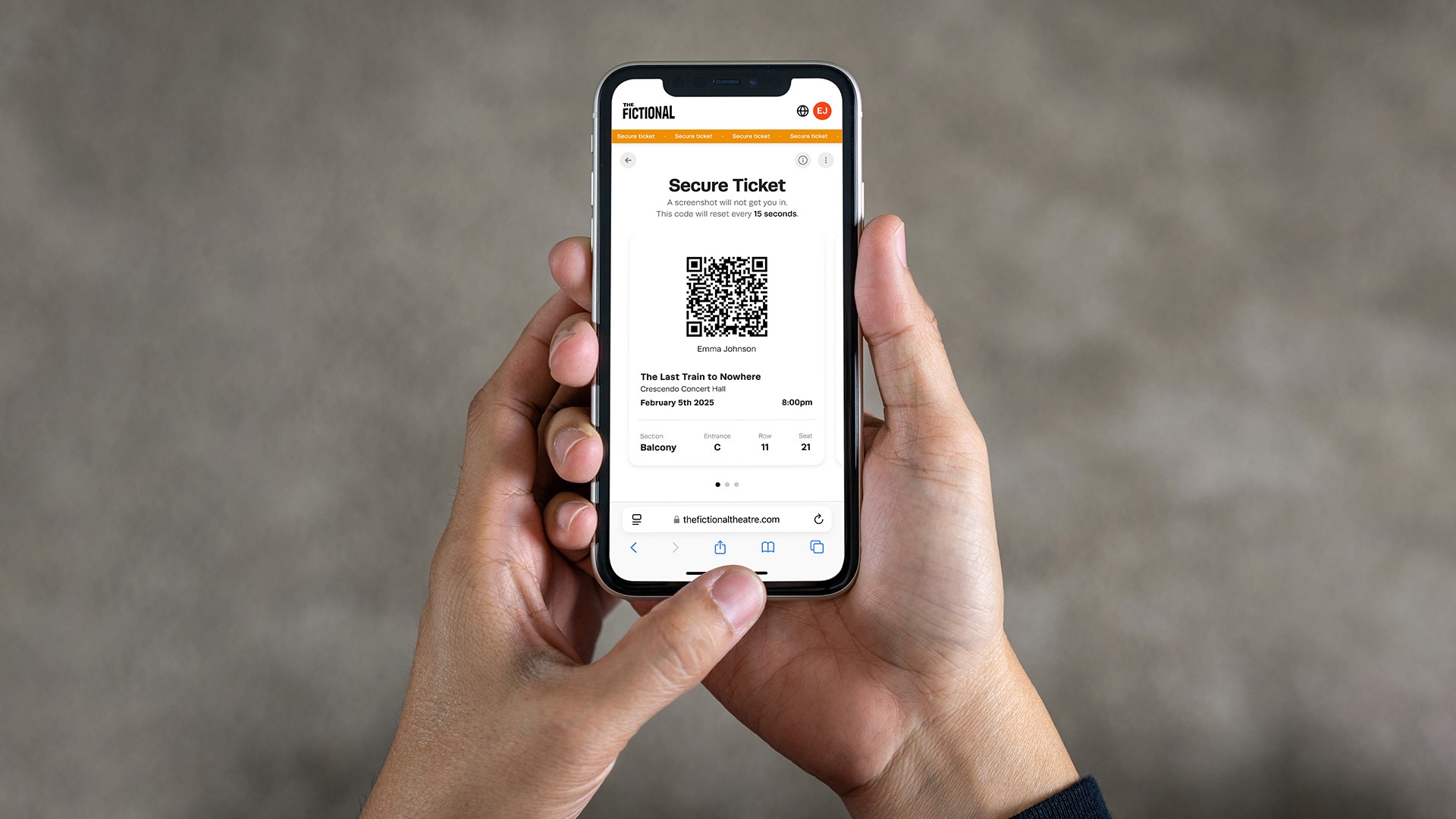
Traditional ticket delivery works by sending a file and hoping it ends up in the right hands. A PDF arrives in someone's inbox, they download it, and from that point you have no visibility over what happens to it. It could be forwarded to a friend, which is fine. It could be sold on a secondary platform, which isn't. It could be screenshotted and duplicated, which means two people showing up at the door with identical barcodes.
For venues where demand is high and tickets carry real value, this is a significant vulnerability. But even for everyday performances, static delivery creates operational friction: customers who lose their ticket email, name changes that require manual re-issuing, group bookings where one person holds all the files and the others are dependent on them. These are routine box office tasks that add up across a season.
What a Secure wallet changes
Rather than sending a file, Tixly's Secure wallet delivers tickets into a web-based wallet that requires a verified login. Customers access their tickets through their existing "My Pages" account, which means every ticket is tied to a real, confirmed person rather than floating in an inbox somewhere.
That single change closes several vulnerabilities at once.
The QR code on a Secure wallet ticket refreshes every 15 seconds. A screenshot taken 20 seconds before showtime is already invalid. That closes the window for resale platforms and fraudulent duplication at the most critical moment - when people are actually trying to get in.
Barcodes can also be set to activate only within a defined window before the event - 90 minutes, for example. Until that window opens, the ticket shows as inactive. There's nothing to screenshot, nothing to list, and no way to validate entry before you want it to begin.
Transfers between customers are allowed - controlled peer-to-peer sharing is a legitimate customer need - but they're tracked in real time within your box office. You can set limits on how many times a ticket can transfer, and once delivery begins you can lock attendee information and transfers entirely. The full history of every ticket is visible in the Order Overview at any time.
Knowing who is actually in your venue
There's a secondary benefit that matters as much as the security angle. With static files, you typically know who bought the tickets. You don't always know who's attending.
A subscription holder might buy six tickets for a performance and send them to family members. A corporate booker might purchase a block and distribute them to colleagues. The person named on the order and the people in the seats are often completely different - and under a traditional delivery model, you have no way to bridge that gap.
Secure wallet changes this through mandatory attendee information. Venues can require name, email, and other details for each ticket holder as a condition of entry. That information is collected during the buying flow and can be updated by each attendee themselves via the wallet. When your audience walks through the door, every seat is tied to a confirmed individual rather than an anonymous booking.
This has obvious security benefits, but the audience insight benefit is just as significant. For venues focused on building direct relationships with their entire audience - not just the person who made the purchase - it's a meaningful step forward.
A real example: the Vienna Philharmonic's New Year's concert
The Vienna Philharmonic's New Year's concert is one of the most sought-after events in the classical music calendar. Tickets are genuinely scarce, demand is global, and the secondary market is active.
For an event like that, standard PDF delivery creates an open invitation for fraud and resale. The Vienna Philharmonic used Tixly's Secure wallet for the concert, giving them dynamic QR codes, verified attendee identity, and controlled delivery for an event where protecting every ticket matters.
It's a useful illustration of where Secure wallet earns its keep - high-demand shows where the stakes of a duplicated or resold ticket are highest, and where knowing exactly who is in the hall has both security and reputational value.
On-demand, not all-or-nothing
One practical point worth making: Secure wallet is designed to be activated for the events that need it most, rather than applied uniformly across your entire programme. A Tuesday matinee with relaxed demand is a different operational context to a sold-out New Year's concert. You can choose exactly when to activate Secure wallet, which means you're using the right level of security for each event without adding unnecessary complexity to lower-risk ones.
No additional hardware is required. The wallet works within your existing Tixly setup, integrated into your purchase and confirmation flow. Customers access it through the same account they already use for self-service exchanges and refunds. From their perspective, it's a natural extension of how they already manage their tickets.